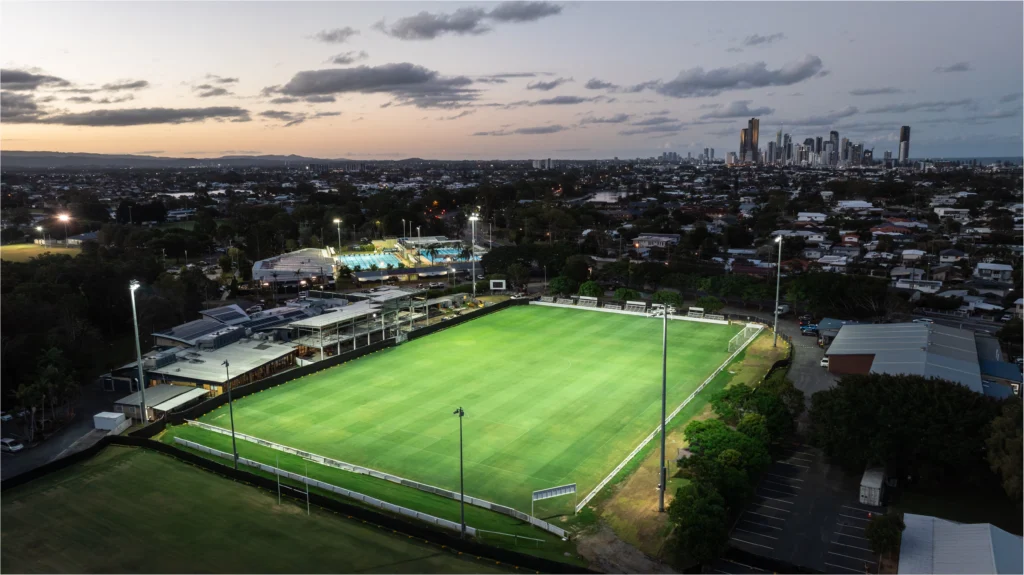
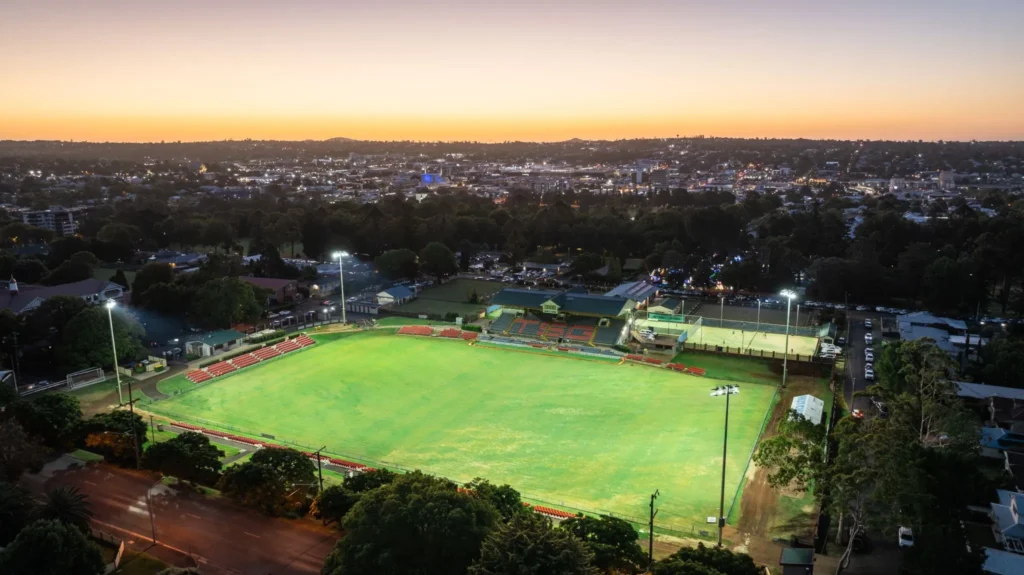
Securing funding grants for sports clubs starts well before an application form is submitted. For sports lighting projects, clubs need to show a clear project need, a practical scope of works, a realistic budget and enough technical detail to demonstrate that the upgrade has been properly assessed.
Across Brisbane, Gold Coast, Ipswich, Toowoomba, Southeast Queensland and Central Queensland, including Rockhampton and Bundaberg, many sporting clubs are managed by volunteer committees. These committees often understand the need for better lighting, but may not have the time or technical background to prepare site assessments, lighting designs, lux level planning, electrical reviews, structural checks and project documentation.
A prepared sports lighting upgrade gives clubs a stronger basis for discussion with committees, councils, funding bodies and contractors. It helps confirm what needs to be upgraded, what infrastructure may be retained, what lighting level is required and what budget should be allowed.
GAP Industries works with sporting clubs across Brisbane, Gold Coast, Ipswich, Toowoomba, Southeast Queensland and Central Queensland, including Rockhampton and Bundaberg, to prepare sports lighting upgrade proposals backed by site assessments, LED lighting recommendations, infrastructure reviews, budget planning and scope of works documentation.
View More: Sports Facility Grants Brisbane & Queensland
What Is a Grant-Ready Sports Lighting Upgrade?
A grant-ready sports lighting upgrade is a project that has been assessed, scoped and budgeted before funding is requested. It outlines the current lighting issue, the proposed upgrade, the expected lighting outcome, the condition of existing infrastructure and the delivery requirements for the site.
For clubs, this process turns a general need for better lighting into a defined infrastructure project. It also helps avoid rushed pricing, incomplete documentation and unclear project assumptions close to the grant deadline.
A prepared lighting upgrade usually considers:
- The sport or sports played at the venue
- Training and competition requirements
- Current lighting performance
- Existing pole locations and mounting heights
- Cabling, switchboards and control gear
- Required lux levels and lighting uniformity
- Glare and spill light control
- Structural condition of poles, crossarms and foundations
- Installation access and site constraints
- Maintenance and operating costs
This information gives the club a clearer view of the project before committing to a funding pathway.
What Should Clubs Prepare Before Applying for Funding?
Before applying for funding, clubs should gather site details, project objectives, existing infrastructure information, lighting expectations and budget requirements. This helps contractors prepare a more accurate scope and gives committees a structured basis for reviewing the project.
A practical starting point includes:
Club and Site Details
Club name, contact person, site address, facility use and primary sporting codes.
Current Lighting Issues
Poor visibility, dark patches, ageing fittings, failed lights, high maintenance costs, limited night time training or safety concerns.
Sporting Requirements
Training use, competition use, level of play, seasonal demand and expected participation growth.
Existing Infrastructure
Pole type, approximate age, condition, cabling, switchboards, control gear and known repairs.
Preferred Project Outcome
LED lighting upgrade, improved lux levels, lower energy use, better uniformity or extended night time use.
Approval Considerations
Council requirements, neighbouring properties, access limits, environmental impact and preferred project timing.
This preparation helps the club move from a broad lighting concern to a practical upgrade plan.
What Should a Sports Lighting Scope of Works Include?
A sports lighting scope of works should explain what will be assessed, supplied, installed, tested and documented. It should set out the project boundaries, technical assumptions, site requirements and expected deliverables in a format that committees and funding stakeholders can review.
A strong scope may include:
- Site assessment to confirm field layout, access, existing infrastructure and constraints
- Lighting design to define lux levels, beam angles, uniformity and coverage
- Existing pole review to check whether current structures may remain suitable
- Electrical assessment of cabling, switchboards, circuits and controls
- LED fitting selection to match output, durability and beam distribution to the venue
- Engineering coordination for poles, crossarms, foundations and wind loading where required
- Installation works covering labour, access equipment, safety controls and installation method
- Testing and commissioning to confirm the system operates as intended
- Handover documentation to support asset records, approvals and future maintenance
This structure helps clubs compare options and understand exactly what is included in the budget.
Can Existing Sports Lighting Infrastructure Be Reused?
Existing sports lighting infrastructure may be reused when poles, cabling, controls and supporting structures are suitable for the proposed upgrade. Retaining serviceable assets can reduce project cost, limit disruption and help clubs achieve better results within funding budgets.
GAP Industries reviews existing lighting assets before recommending major replacement works. This approach is useful for clubs that already have lighting infrastructure in place but need better performance, improved efficiency or lower maintenance demand.
Common pole types at sporting facilities include:
- In-ground steel poles
- Rag bolt base plate poles
- Concrete poles
- Timber poles
- Slip-base poles
- High mast lighting poles
- Guyed poles
- Stadium-style lighting structures
Preliminary inspections may review corrosion, rust, pole straightness, foundation movement, cracking, weld condition, base plates, rag bolts, crossarms, timber deterioration and evidence of previous repairs.
Where required, further assessment may include ultrasonic wall thickness testing, dynamic pole testing, non-destructive testing, foundation integrity assessments, bolt tension testing, structural capacity calculations, wind loading analysis, fatigue assessments and material condition testing.
Modern LED sports lighting systems are often lighter and more efficient than older HID fittings. This may reduce structural loading, although each site still requires proper review before existing assets are retained.
What Lux Levels Should Sporting Clubs Consider?
Lux levels should be selected according to the sport, level of play, field layout and applicable Australian Standards. A community training field, local competition venue and regional competition facility will usually require different lighting performance.
Indicative planning targets include 100 lux for community training, 200 lux for competition training, 300 lux for local competition, 500 lux for regional competition and 750 lux for broadcast or elite competition facilities.
These figures are planning references only. Final requirements should be confirmed through site specific lighting design, taking into account pole layout, mounting height, beam control, glare, spill light and lighting uniformity.
GAP Industries assists clubs in selecting suitable lighting levels for their facility and developing practical LED upgrade pathways for safe, reliable night time use.
How Does LED Sports Lighting Improve a Funding Case?
LED sports lighting improves a funding case by linking the upgrade to safer use, lower power consumption, reduced maintenance and increased facility availability. These outcomes are relevant to clubs seeking to improve participation, asset performance and long term operating efficiency.
Older HID, halogen and metal halide systems can create uneven light, slow start up, higher running costs and more frequent lamp replacement. LED systems provide better control, instant operation, improved visibility and longer service life.
For sporting clubs, the strongest project case connects the lighting upgrade to practical outcomes:
- Safer evening training
- Improved match conditions
- Better visibility for players, officials and spectators
- Lower power consumption
- Reduced maintenance pressure
- Increased facility use
- Improved asset reliability
- Better long term value from available funding
This gives the project a clear operational purpose and helps committees explain why the upgrade should be prioritised.
How GAP Industries Supports Sports Lighting Funding Applications
GAP Industries supports the technical planning, assessment and delivery of sports lighting upgrades across Brisbane, Gold Coast, Ipswich, Toowoomba, Southeast Queensland and Central Queensland, including Rockhampton and Bundaberg.
The process helps clubs understand what needs to be upgraded, what infrastructure may be reused and what level of investment is required before submitting a funding application.
GAP Industries can assist with:
- Sports lighting assessments
- Project management
- Lighting design
- Lux calculations
- Electrical installation
- Crossarm replacement
- Pole upgrade coordination
- Structural engineering coordination
- Project delivery
- Budget planning
- Scope of works documentation
This support is useful for clubs preparing funding submissions, reviewing ageing infrastructure or planning a staged LED upgrade.
GAP Industries can provide a direct technical and delivery pathway that helps avoid unnecessary costs from separate project management firms and builders, while still supporting a fully compliant sports lighting system.
Two-Stage Sports Lighting Grant Process
GAP Industries supports sporting clubs through a clear two-stage process: preparing the grant-ready technical scope and budget, then delivering the project once funding is approved.
Grant-Ready Scope and Budget Lighting Assessment
The first stage gives clubs the technical information required to prepare a stronger funding submission.
This stage may include an initial site visit to understand the project scope and lighting performance required. GAP Industries can inspect existing poles, review lighting infrastructure, take existing lux readings for the grant submission and prepare lighting design information.
Where existing poles may be retained, GAP Industries can coordinate structural engineering input to assess the site information and determine what engineering is required for sign off. This helps clubs understand whether poles can be reused, upgraded or may need replacement.
The Grant-Ready Scope and Budget Lighting Assessment can include:
- Initial site visit
- Review of scope and lighting performance requirements
- Inspection of existing poles
- Structural engineering coordination where required
- Existing lux readings for grant submission
- Lighting design
- Grant-ready budget
- Provisional sums for pole replacements where required
- Scope of works documentation
- Support with grant submission questions from the funding body
This stage helps the club prepare a practical funding application with clearer technical detail, a more realistic budget and fewer unknowns before submission.
Grant Project Delivery
The second stage begins once the grant is approved.
GAP Industries delivers the project and installs the sports lighting system as per the approved design. This may include electrical installation, lighting installation, crossarm replacement, pole upgrade coordination, testing, commissioning and project handover.
Grant Project Delivery may include:
- Approved grant
- Final project coordination
- Electrical installation
- Lighting installation
- Crossarm replacement
- Pole upgrade coordination where required
- Installation as per design
- Testing and commissioning
- Handover documentation
By supporting both the grant-ready assessment and final project delivery, GAP Industries helps clubs move from funding preparation to compliant sports lighting installation through a clearer and more direct process.
For full project delivery, GAP Industries also provides sports lighting design, supply, installation, upgrades, testing, commissioning and maintenance across Brisbane, Gold Coast, Ipswich, Toowoomba, Southeast Queensland and Central Queensland, including Rockhampton and Bundaberg.
Sports Lighting Funding Readiness Checklist
A sports lighting funding checklist helps clubs confirm whether the project has enough technical and budget detail before an application is prepared. It also gives committees a practical framework for discussing the upgrade with contractors, councils and funding stakeholders.
Clubs that can answer these questions are better placed to progress from concept to application with fewer unknowns.
Frequently Asked Questions About Funding Grants for Sports Clubs
What are funding grants for sports clubs?
Funding grants for sports clubs are financial support programs that help eligible clubs improve facilities, equipment, participation, safety or access. For sports lighting projects, clubs may need a clear scope, budget, project justification and supporting technical information.
Can sports clubs apply for grants for LED lighting upgrades?
Yes. LED lighting upgrades may be suitable for some sport and recreation infrastructure grants, depending on the program criteria. Clubs should confirm eligibility, funding objectives and required documentation before preparing an application.
What documents are useful for a sports lighting grant application?
Useful documents may include a site assessment, lighting design, lux level recommendations, infrastructure review, budget estimate, scope of works, supplier information, engineering notes and evidence of community benefit.
Does a club need an engineering assessment before applying?
An engineering assessment may be required when existing poles, crossarms, foundations or structures are being retained. Structural input helps confirm whether current assets are suitable for the proposed LED lighting upgrade.
What is a Grant-Ready Scope and Budget Lighting Assessment?
A Grant-Ready Scope and Budget Lighting Assessment gives a club the technical information needed before submitting a funding application. It can include a site visit, existing lux readings, lighting design, pole inspection, structural engineering coordination where required, scope documentation and a grant-ready budget.
What happens after a sports lighting grant is approved?
Once a grant is approved, GAP Industries can deliver the sports lighting project and install the system as per design. This may include electrical installation, lighting installation, crossarm replacement, pole upgrade coordination, testing, commissioning and handover documentation.
Can existing sports lighting poles be reused?
Existing poles can sometimes be reused if they are correctly positioned, structurally suitable and able to support the proposed lighting system. Pole condition, foundations, mounting arrangements and wind loading should be reviewed before reuse is confirmed.
What lux level does a community sports field need?
The required lux level depends on the sport, level of play and facility use. Community training may target around 100 lux, while competition and regional facilities may require higher levels. Each project should be confirmed through site specific lighting design.
How can GAP Industries help with a sports lighting funding proposal?
GAP Industries can assist with site assessments, lighting design, lux calculations, electrical infrastructure reviews, structural engineering coordination, budgets, scopes of work and grant-ready documentation. This information supports clubs preparing funding applications for sports lighting upgrades.
Does GAP Industries service Southeast Queensland and Central Queensland?
Yes. GAP Industries supports sports lighting projects across Brisbane, Gold Coast, Ipswich, Toowoomba, Southeast Queensland and Central Queensland, including Rockhampton and Bundaberg, including clubs, schools, councils, private venues and facility managers.